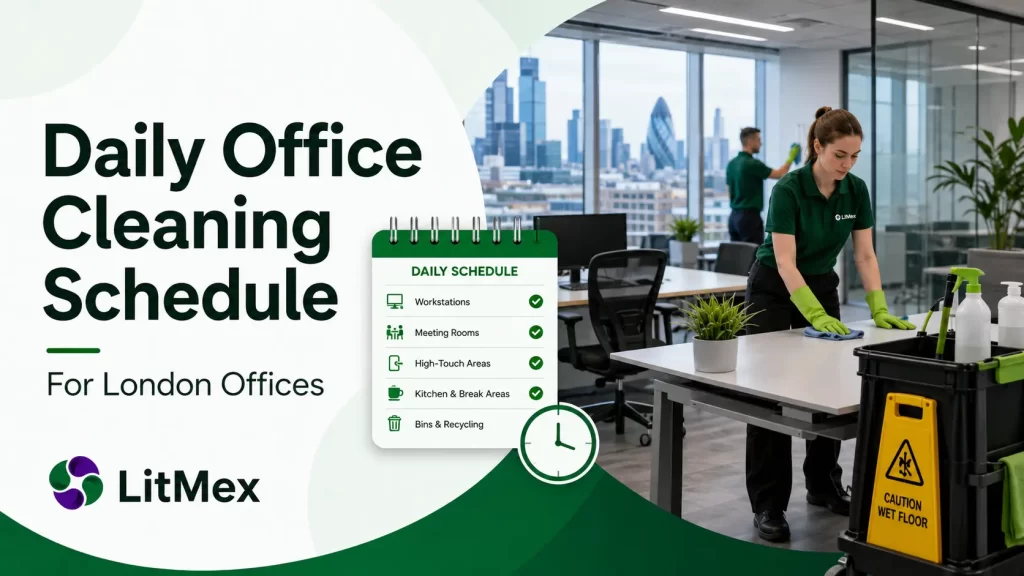
A daily office cleaning schedule should keep the workplace clean, usable and ready without disrupting staff, visitors or meetings.
For most busy London offices, daily cleaning should cover bins, desks, kitchens, washrooms, meeting rooms, reception areas, high-touch points and main floors, with timing planned around how the office is used.
What Should a Daily Office Cleaning Schedule Include?
A daily office cleaning schedule should include waste removal, kitchen cleaning, washroom cleaning, high-touch-point cleaning, desk and workstation cleaning where agreed, meeting room resets, reception presentation, floor care and basic checks for supplies or visible issues.
The best daily office cleaning schedule is not just a list of tasks. It should explain what happens before staff arrive, what may need checking during the day, what is reset after staff leave, and which tasks must be agreed clearly with the cleaning provider.
LitMex provides daily office cleaning in London for commercial workplaces that need reliable routines around staff use, shared facilities, visitors, access times and presentation standards.
- What a daily office cleaning schedule should include
- Opening, midday and evening task split
- Daily cleaning checklist by office area
- High-touch points that should be cleaned daily
- When daytime janitorial support is needed
- FAQs for office managers and facilities teams
Daily Office Cleaning Schedule Table
A practical daily office cleaning schedule for a London office usually covers the areas people notice and use most often: bins, kitchens, washrooms, desks, meeting rooms, reception areas, touchpoints and main floors.
| Daily cleaning area | What should be done | Why it matters |
|---|---|---|
| Bins and recycling | Empty desk, kitchen, washroom and meeting room bins; replace liners where needed. | Prevents smells, overflow and workplace complaints. |
| Desks and workstations | Wipe agreed clear surfaces, chair areas and shared desk zones. | Keeps work areas presentable and ready for use. |
| Kitchens and breakout areas | Clean worktops, sinks, taps, appliance fronts, tables and visible spills. | Shared food areas decline quickly when they are not cleaned daily. |
| Washrooms | Clean toilets, basins, taps, mirrors, floors, touchpoints and replenish agreed supplies. | Washrooms are one of the quickest sources of staff complaints. |
| Meeting rooms | Clear waste, wipe tables, reset chairs and check floors. | Keeps client and internal meeting spaces ready. |
| Reception and entrance areas | Clean visible surfaces, entrance floors, seating and touchpoints. | Protects the first impression of the office. |
| High-touch points | Wipe door handles, switches, push plates, shared handles and kitchen touchpoints. | Helps maintain a cleaner shared workplace. |
| Main floors | Vacuum, sweep, mop or spot clean high-use routes. | Reduces dirt buildup from footfall, weather and daily use. |
LitMex tip: The exact routine should depend on office size, staff numbers, desk use, visitor levels, washrooms, kitchens, floor type and whether cleaning happens before opening, during the day or after staff leave.
Why Daily Office Cleaning Matters in London Workplaces
London offices often have tight working patterns, high visitor expectations and shared facilities that are used repeatedly throughout the day. Even when an office looks tidy in the morning, bins, kitchens, toilets, meeting rooms and high-touch areas can become untidy quickly.
Daily office cleaning helps prevent small issues becoming repeated complaints. It also keeps staff from informally taking on cleaning tasks that should sit within a professional commercial cleaning routine.
Staff confidence
- Cleaner shared spaces
- Fewer repeated complaints
- Better kitchen and washroom standards
- Clearer daily expectations
Visitor presentation
- Ready reception areas
- Cleaner meeting rooms
- Better entrance appearance
- More professional first impressions
Facilities control
- Defined cleaning tasks
- Clear timing and access
- Better waste routines
- Reduced disruption during work
Daily Office Cleaning Schedule by Time of Day
Not every office needs cleaning at the same time. Some workplaces need an early morning clean before staff arrive. Others work better with evening cleaning after staff leave. Larger or busier workplaces may also need daytime janitorial checks.
| Timing | Best for | Typical cleaning focus |
|---|---|---|
| Early morning cleaning | Offices that need to look ready before staff, clients or visitors arrive. | Reception, kitchens, washrooms, bins, meeting rooms, desks and entrance floors. |
| Midday or daytime checks | Larger offices, managed buildings, co-working spaces or sites with heavy washroom and kitchen use. | Washroom checks, consumables, kitchen touchpoints, spill response, bins and visible issues. |
| Evening cleaning | Offices that are busy during the day and need a full reset after staff leave. | Desks, bins, kitchens, washrooms, floors, meeting rooms and touchpoints. |
| Out-of-hours cleaning | Client-facing or busy workplaces where cleaning would interrupt work. | Low-disruption cleaning around access, alarms, building rules and agreed scope. |
For many commercial offices, the best approach is evening cleaning with morning readiness in mind. For larger workplaces, daytime checks can be added through janitorial services in London where regular washroom checks, consumables, spill response or day porter support are needed.
Opening, Midday and Evening Task Split
A reliable daily office cleaning schedule should separate tasks by timing, especially if the office is busy or client-facing.
| Time window | What should happen | Who it suits |
|---|---|---|
| Before opening | Check reception, entrance floors, meeting rooms, washrooms, kitchens, bins and visible presentation areas. | Offices expecting staff or visitors early in the day. |
| During the working day | Check washrooms, replenish agreed supplies, remove visible waste, respond to spills and keep shared kitchens under control. | Larger offices, co-working spaces, managed offices and high-footfall sites. |
| After staff leave | Empty bins, wipe agreed desks, clean kitchens, clean washrooms, reset meeting rooms, clean touchpoints and vacuum or mop agreed floors. | Most offices that want cleaning without disruption. |
| End-of-week reset | Add more detailed attention to edges, chair areas, appliance fronts, entrance dirt and visible buildup. | Offices that want the Monday morning workplace to feel reset. |
For offices where cleaning during the working day would interrupt staff, calls, visitors or meetings, out-of-hours office cleaning in London may be the better option.
Daily Office Cleaning Checklist by Area
The daily office cleaning checklist should be clear enough that both the business and the cleaning provider know what is included.
| Office area | Daily cleaning tasks |
|---|---|
| Reception and entrance | Wipe reception surfaces, clean visible marks, tidy seating, remove waste, vacuum or mop entrance routes and clean agreed touchpoints. |
| Desks and workstations | Wipe clear desk surfaces, remove visible dust, clean agreed shared workstations and check surrounding floor areas. |
| Meeting rooms | Clear cups and waste, wipe tables, reset chairs, empty bins, spot clean floors and clean shared touchpoints. |
| Kitchens and breakout areas | Clean worktops, sinks, taps, splash areas, appliance fronts, tables, bins and visible spills. |
| Washrooms | Clean toilets, basins, taps, mirrors, floors, cubicle touchpoints, dispensers and agreed supply points. |
| Floors | Vacuum carpets, sweep or mop hard floors, spot clean spills and pay attention to entrances and high-use walkways. |
| Waste and recycling | Empty bins, replace liners where agreed, remove waste to the correct collection point and check for overflow. |
| Shared equipment areas | Wipe printer areas, shared handles, cupboard fronts, switches and frequently touched surfaces. |
This checklist should be adjusted for each workplace. A small hybrid office may need a lighter routine, while a busy office with multiple washrooms, kitchens and visitors will need a more detailed daily schedule.
High-Touch Points That Should Be Included Daily
High-touch points are surfaces that many people use throughout the day. In an office, they are often missed when the cleaning scope is vague.
Doors and access
- Door handles
- Push plates
- Access panels
- Lift buttons
Shared work areas
- Meeting room tables
- Reception counters
- Printer areas
- Shared desk zones
Kitchens and washrooms
- Kitchen taps
- Appliance handles
- Washroom dispensers
- Light switches
Scope note: The cleaning schedule should also clarify what is not included, such as personal papers, cluttered desks, staff dishes or restricted rooms. This prevents confusion and helps cleaners work properly.
What Staff Should Do Before the Cleaner Arrives
A daily office cleaner can only clean surfaces that are accessible. Office managers should make the routine easier by setting simple workplace rules.
| Staff action | Why it helps |
|---|---|
| Keep desks reasonably clear | Allows cleaners to wipe agreed surfaces safely. |
| Remove personal food waste | Reduces smells, pests and kitchen complaints. |
| Put cups and dishes in the correct place | Prevents cleaners becoming responsible for staff washing-up. |
| Report spills or damage quickly | Helps the cleaning team respond before marks spread. |
| Keep restricted rooms clearly marked | Avoids access confusion. |
| Use bins correctly | Keeps recycling, general waste and food waste manageable. |
A clear-desk policy does not need to be harsh. It simply gives the cleaning team access to the areas they are expected to clean.
Daily Office Cleaning for Hybrid Offices
Hybrid offices still need a daily cleaning schedule if shared facilities are used regularly. Even when desk occupancy changes, kitchens, toilets, bins, meeting rooms and touchpoints can still need frequent attention.
| Hybrid pattern | Daily cleaning approach |
|---|---|
| Busy Tuesday to Thursday | Focus the strongest cleaning around peak attendance days. |
| Quiet Mondays or Fridays | Keep shared facilities checked but reduce unnecessary desk work. |
| Shared desks | Include workstation touchpoints and desk zones clearly. |
| Meeting-heavy days | Reset meeting rooms after busy booking periods. |
| Visitor days | Clean reception and washrooms before guests arrive. |
| Part-used floors | Agree which areas are active and which can be cleaned less often. |
Hybrid working often fails when cleaning is based only on the number of desks. A better approach is to plan around actual attendance, meeting room use, kitchen use and staff complaints.
When Daily Cleaning Needs Daytime Janitorial Support
Some offices need more than one clean outside working hours. If the office has high footfall, multiple washrooms, shared kitchens, reception traffic or frequent spills, daytime support may be useful.
| Daytime need | Why it matters |
|---|---|
| Washroom checks | Toilets and basins may need attention during the day. |
| Consumable checks | Soap, paper towels and liners may need replenishing. |
| Spill response | Quick attention reduces disruption and visible mess. |
| Reception presentation | Client-facing areas can be kept ready. |
| Kitchen checks | Shared food areas may need extra attention after lunch. |
| Waste control | Busy offices may need bins checked before the evening clean. |
For larger offices, managed buildings and busy commercial sites, janitorial services in London can support the daily office cleaning schedule with daytime checks and practical site routines.
What HSE Guidance Means for Daily Office Cleaning
Daily office cleaning should support a clean and usable workplace. HSE workplace facilities guidance says workers must have access to toilets and hand basins, drinking water, somewhere to rest and eat meals, and a healthy working environment that includes a clean workplace with appropriate waste containers.
This does not mean every office needs exactly the same routine. It means cleaning should be planned around the areas people rely on every working day: toilets, basins, kitchens, rest areas, waste points, workstations and traffic routes.
Useful official reference: HSE workplace health, safety and welfare guidance.
Signs Your Daily Office Cleaning Schedule Is Not Working
A daily office cleaning schedule should reduce complaints, not create repeated uncertainty. If the same problems keep appearing, the routine may need changing.
| Problem | What it may mean |
|---|---|
| Bins overflow before the next clean | Waste points need more frequent attention or better placement. |
| Staff complain about toilets | Washroom checks are too light or too infrequent. |
| Kitchens smell after lunch | Food waste, sinks, worktops or appliance fronts need a clearer routine. |
| Meeting rooms are not ready | Room reset is not properly included. |
| Desks are dusty despite daily cleaning | Clear-desk rules or desk-surface scope may be unclear. |
| Reception looks marked by midday | Client-facing areas may need a daytime check. |
| Cleaners miss certain rooms | Access instructions, locked areas or scope may be unclear. |
| Staff start cleaning shared spaces themselves | The cleaning routine is not matching office use. |
The fix is not always more cleaning. Sometimes it is clearer timing, better access, better task ownership or a written daily cleaning schedule.
How to Brief a Cleaning Company on Your Daily Schedule
Before requesting a quote, prepare the key information a cleaning company needs to build a practical daily schedule.
| Information to provide | Why it matters |
|---|---|
| Office area or location | Helps plan coverage and access. |
| Number of staff or daily attendance | Shows how heavily the office is used. |
| Number of desks | Affects workstation and bin routines. |
| Number of kitchens | Changes time needed for shared food areas. |
| Number of washrooms | Washrooms are a high-priority daily area. |
| Meeting room use | Affects reset tasks and timing. |
| Cleaning time preference | Helps decide morning, evening or out-of-hours cleaning. |
| Access instructions | Reduces missed visits and security confusion. |
| Current complaints | Shows where the existing routine is failing. |
| Add-on needs | Carpet cleaning, deep cleaning or floor care can be planned separately. |
This makes the quote clearer and reduces the risk of a cleaning schedule that sounds good on paper but does not match the workplace.
Need a Daily Office Cleaning Schedule for Your London Office?
LitMex helps London businesses build practical daily office cleaning schedules around staff use, access times, kitchens, washrooms, meeting rooms, reception areas and visitor expectations.
If your office needs weekday cleaning, selected high-use days, evening cleaning, early morning cleaning or daytime janitorial support, LitMex can help you choose the right routine.
Related Office Cleaning Services

FAQs: Daily Office Cleaning Schedule
What is a daily office cleaning schedule?
A daily office cleaning schedule is an agreed routine for cleaning the office every working day or several days per week. It usually covers bins, desks, kitchens, washrooms, meeting rooms, reception areas, floors and high-touch points.
What should be included in a daily office cleaning schedule?
A daily office cleaning schedule should include waste removal, kitchen cleaning, washroom cleaning, desk and workstation cleaning where agreed, meeting room resets, reception cleaning, high-touch-point cleaning and main floor care.
Is daily office cleaning needed for every office?
No. Some low-use hybrid offices may not need cleaning every day. Daily office cleaning is usually better for offices with regular staff attendance, shared kitchens, washrooms, visitors, meeting rooms or frequent complaints.
Should office cleaning happen before or after work?
It depends on the office. Early morning cleaning prepares the workplace before staff arrive, while evening cleaning resets the office after the working day. Busy workplaces may also need daytime janitorial checks.
What are daily office cleaner tasks?
Daily office cleaner tasks usually include emptying bins, wiping agreed surfaces, cleaning kitchens, cleaning washrooms, resetting meeting rooms, vacuuming or mopping main floors, cleaning reception areas and wiping high-touch points.
What high-touch points should be cleaned daily in an office?
Daily high-touch points can include door handles, push plates, light switches, lift buttons, reception counters, meeting room tables, kitchen taps, appliance handles, printer areas, washroom dispensers and shared desk zones.
How do hybrid offices change the daily cleaning schedule?
Hybrid offices should base cleaning around actual office use, not only desk count. Peak attendance days, shared desks, meeting rooms, kitchens, washrooms and visitor days should shape the schedule.
Do office kitchens need daily cleaning?
Yes, office kitchens usually need daily cleaning when the workplace is in use. Worktops, sinks, taps, appliance fronts, tables, bins and visible food waste can quickly cause smells and complaints if left.
Do office washrooms need daily cleaning?
Office washrooms usually need daily cleaning when staff or visitors use them regularly. Larger offices, shared buildings and client-facing workplaces may also need daytime washroom checks.
When should we use janitorial services instead of only evening cleaning?
Janitorial services are useful when the office needs support during the working day, such as washroom checks, consumable replenishment, spill response, reception presentation, kitchen checks or ongoing site support.