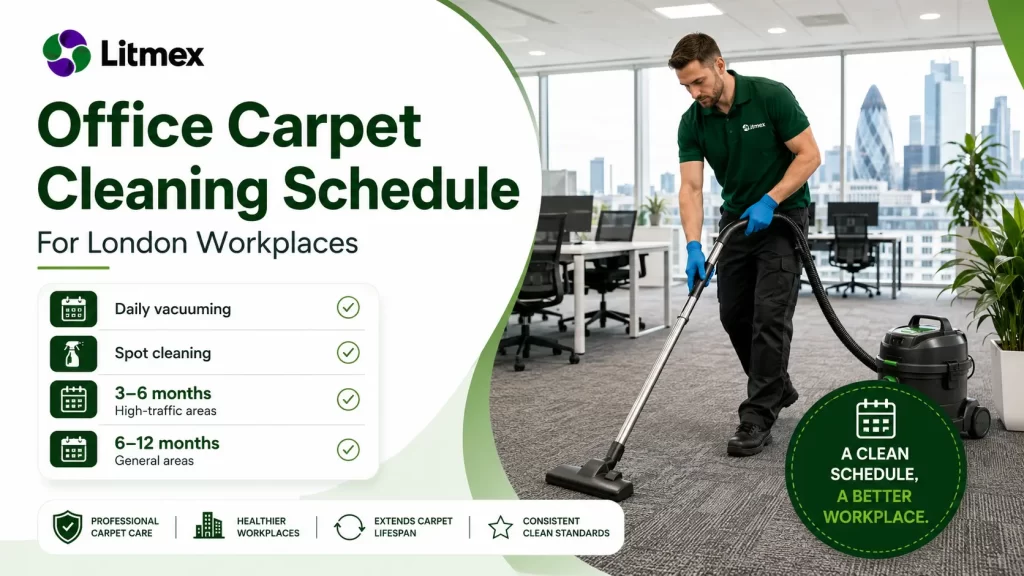
An office carpet cleaning schedule helps London workplaces keep carpets presentable, control footfall build-up and plan professional cleaning before stains, smells and worn traffic lanes become obvious.
Office carpets collect more than visible dirt. Entrances, corridors, shared desks, meeting rooms and breakout spaces can hold dust, grit, spills, moisture and marks from daily use. A planned office carpet cleaning schedule helps office managers decide what needs daily vacuuming, what needs spot treatment and when professional office carpet cleaning should be booked.
How Often Should Office Carpets Be Cleaned?
Most standard office carpets should be professionally cleaned every 6 to 12 months, while high-traffic areas such as entrances, corridors, reception areas, lift lobbies and breakout spaces may need professional cleaning every 3 to 6 months. A clear office carpet cleaning schedule helps separate daily vacuuming, fast spot cleaning and planned professional carpet cleaning.
The right office carpet cleaning schedule depends on footfall, carpet colour, entrance matting, weather exposure, spill frequency, staff numbers, visitor use, cleaning standards and how much downtime the business can allow for drying.
LitMex provides office carpet cleaning in London for commercial workplaces that need low-disruption carpet cleaning around staff, access times and workplace presentation standards.
- Office carpet cleaning frequency by workplace area
- Daily, weekly, monthly and periodic carpet care
- High-traffic carpet zones in London offices
- When vacuuming is not enough
- How to plan carpet cleaning without disrupting work
- FAQs for office managers and facilities teams
Office Carpet Cleaning Schedule by Area
A useful office carpet cleaning schedule should separate general office areas from high-traffic zones. The carpet in a quiet private office will not need the same frequency as a reception route, lift lobby or busy corridor.
| Office area | Routine carpet care | Professional carpet cleaning frequency |
|---|---|---|
| Reception and entrances | Vacuum daily or every working day, with quick spot checks after wet weather. | Every 3 to 6 months, or more often if visitor footfall is heavy. |
| Main corridors and walkways | Vacuum daily or several times per week depending on staff movement. | Every 3 to 6 months for busy routes; every 6 months for moderate use. |
| Open-plan desk areas | Vacuum several times per week, with extra attention under desks and chair zones. | Every 6 to 12 months depending on staff numbers and carpet condition. |
| Meeting rooms | Vacuum after heavy use or at least weekly, with spot checks for drink spills. | Every 6 to 12 months, or before important client periods. |
| Breakout and kitchen-adjacent carpet | Vacuum regularly and respond quickly to spills, crumbs and drink marks. | Every 3 to 6 months where food and drink use is frequent. |
| Executive offices and low-use rooms | Vacuum weekly or as part of the routine office cleaning schedule. | Every 12 months, unless stains, odours or visible marks appear sooner. |
| Stairs and landing carpets | Vacuum frequently, especially front edges and turning points. | Every 3 to 6 months in busy buildings; every 6 to 12 months in lower-use spaces. |
| Post-event or post-refurbishment areas | Vacuum after activity and inspect for dust, grit, stains or contractor residue. | As needed after the event, move, project or refurbishment work. |
LitMex tip: Do not wait until the whole office carpet looks dirty. A practical office carpet cleaning schedule should treat high-traffic areas before the rest of the floor visibly declines.
Daily, Weekly, Monthly and Periodic Office Carpet Cleaning Schedule
Professional carpet cleaning is only one part of the schedule. London offices also need routine vacuuming, spill response and simple inspection habits between deeper cleans.
A good office carpet cleaning schedule should make clear which carpet areas are checked every day, which are reviewed weekly or monthly, and which areas need planned professional cleaning every few months.
| Frequency | Carpet care tasks | Why it matters |
|---|---|---|
| Daily | Vacuum entrances, corridors, reception routes and high-use walkways. | Removes grit before it works deeper into the carpet pile. |
| Several times per week | Vacuum desk zones, meeting rooms and shared office areas. | Keeps visible carpet standards consistent between professional cleans. |
| As needed | Spot respond to drink spills, food marks, mud, leaks or local stains. | Fast action reduces staining and odour problems. |
| Monthly | Inspect high-traffic lanes, edges, under desks, stairs, entrances and breakout areas. | Helps facilities teams spot early signs before the carpet looks heavily worn. |
| Quarterly | Review whether reception, corridors or food-adjacent areas need professional cleaning. | High-use zones often need planned attention before annual cleaning. |
| 6 to 12 monthly | Schedule professional office carpet cleaning for general office carpet areas. | Resets embedded soil, dullness and marks that routine vacuuming cannot remove. |
For everyday floor and office routines, office cleaning in London helps keep desks, bins, kitchens, washrooms, floors and shared areas maintained between periodic carpet cleans.
When Vacuuming Is Not Enough
Vacuuming removes loose surface soil, but it does not always remove embedded dirt, drink marks, odours, traffic-lane dullness or stains that have settled into the carpet fibres.
If your office carpet cleaning schedule only relies on vacuuming, it may not be enough for entrance routes, corridors, reception areas, meeting rooms or carpeted breakout spaces with regular London office footfall.
Visible carpet signs
- Dark walkways near entrances
- Dirty carpet edges
- Marks around desk chairs
- Flat-looking traffic lanes
Staff and visitor signs
- Complaints about stale smells
- Meeting rooms feel tired
- Reception looks less professional
- Staff notice repeated stains
Operational signs
- Wet weather has increased dirt
- Footfall has grown
- Spills have not been treated quickly
- Carpets have not been cleaned for over a year
Practical rule: If the carpet still looks dull, marked or stale after routine vacuuming, it is probably time to schedule professional carpet cleaning rather than increasing vacuuming alone.
Office Carpet Cleaning Schedule by Footfall
Footfall is one of the biggest factors in carpet cleaning frequency. A small office with low visitor traffic may need a very different office carpet cleaning schedule from a busy London workplace with staff, clients, couriers and shared facilities moving through the space every day.
| Workplace type | Typical carpet pressure | Suggested professional cleaning frequency |
|---|---|---|
| Small low-traffic office | Limited staff, few visitors, lower daily movement. | Every 12 months, with spot cleaning where needed. |
| Standard office floor | Regular staff use, meeting rooms, desk areas and shared corridors. | Every 6 to 12 months. |
| Busy open-plan office | Higher staff movement, shared desks, meeting rooms and kitchen traffic. | Every 6 months, with high-traffic areas reviewed every 3 to 6 months. |
| Client-facing workplace | Reception, meeting rooms and visitor routes affect first impressions. | Every 3 to 6 months for visible routes; every 6 to 12 months elsewhere. |
| Managed office or shared workspace | Multiple users, shared facilities and changing occupancy. | Every 3 to 6 months in common routes, with planned periodic cleaning. |
| Office near heavy footfall or wet entrances | More dirt and moisture carried in from streets, parking areas or public transport routes. | Every 3 to 6 months for entrance and corridor zones. |
High-Traffic Carpet Zones in London Offices
Carpet cleaning should not be planned evenly across the whole office. Some zones take far more wear than others and should be inspected more often as part of the office carpet cleaning schedule.
| High-traffic zone | Common carpet issue | What to do |
|---|---|---|
| Entrance routes | Grit, moisture, darkened carpet and tracked-in dirt. | Use good entrance matting, vacuum frequently and schedule professional cleaning before marks spread. |
| Reception areas | Visitor footfall, furniture marks and visible presentation issues. | Inspect monthly and clean professionally every 3 to 6 months where busy. |
| Main corridors | Traffic-lane dullness and compacted carpet pile. | Vacuum daily or regularly and plan periodic carpet cleaning by route, not only by whole floor. |
| Meeting rooms | Drink spills, chair marks and worn routes around tables. | Spot respond quickly and include meeting rooms in planned professional cleaning. |
| Kitchen-adjacent carpet | Food crumbs, drink spills, stains and odour risk. | Inspect frequently and treat spills early before they become permanent marks. |
| Desk chair zones | Wear rings, dust build-up and marks around workstations. | Vacuum under desks and review chair mat or carpet protection where suitable. |
| Stairs | Front-edge wear, turning-point dirt and visible traffic patterns. | Vacuum carefully and include stairs in periodic professional cleaning. |
| Printer and equipment areas | Paper dust, toner traces and local footfall around shared equipment. | Include these small but high-use zones in routine inspection. |
Carpet Cleaning Around Business Hours
Office carpet cleaning should be planned around access, drying time, staff movement, security rules and how quickly the carpeted areas need to be used again.
A realistic office carpet cleaning schedule should include when areas can be cleaned, how long they need before normal foot traffic returns, and whether evening, early morning or weekend cleaning is the least disruptive option.
Plan before cleaning
- Agree which carpet zones are included
- Confirm access times and alarm details
- Move small items where agreed
- Identify priority stains or complaints
- Plan drying time before staff return
- Confirm whether weekend or evening work is better
Reduce disruption
- Clean in sections where access is limited
- Keep dry routes available where possible
- Use clear communication with staff
- Avoid busy client periods
- Schedule high-use areas out of hours
- Inspect before desks and rooms are fully reused
For workplaces that need cleaning before staff arrive, after staff leave or at weekends, out-of-hours office cleaning in London can help support low-disruption scheduling.
What HSE Guidance Means for Carpet and Floor Cleaning
HSE guidance on slips and trips explains that cleaning helps remove contamination that could cause accidents, but cleaning can also introduce temporary hazards such as wet floors, trailing cables or restricted access if it is not managed properly.
For office carpet cleaning, the practical point is to plan the method, timing and access carefully. Carpet cleaning should not leave staff walking through damp areas, blocked routes or cleaning equipment cables during busy office hours.
Useful official reference: HSE guidance on cleaning and slips/trips.
Office Carpet Cleaning Schedule Quote Checklist
A clear quote brief helps the cleaning provider recommend the right carpet cleaning schedule, cleaning method and access plan.
| Information to provide | Why it helps |
|---|---|
| Office location | Helps plan travel, access and site logistics. |
| Approximate carpeted area | Supports pricing, staffing and time estimates. |
| Carpet zones to clean | Clarifies whether the job includes reception, corridors, stairs, meeting rooms or the whole office. |
| Footfall level | Helps decide whether cleaning should be 3-monthly, 6-monthly or annual. |
| Known stains or odours | Allows the provider to plan spot treatment and realistic expectations. |
| Preferred cleaning window | Supports evening, weekend or early morning scheduling where needed. |
| Access and parking information | Helps plan equipment movement, loading and building entry. |
| Drying time restrictions | Shows when staff, visitors or tenants need to reuse the carpeted areas. |
| Regular office cleaning setup | Helps connect carpet cleaning with the wider office cleaning schedule. |
| Future maintenance goals | Clarifies whether the business wants a one-off clean or planned periodic carpet care. |
For recurring office cleaning specifications, contract office cleaning in London can help tie carpet care into the wider workplace cleaning plan.
Need an Office Carpet Cleaning Schedule for Your London Workplace?
LitMex helps London offices plan professional carpet cleaning around footfall, access, drying time, staff use, visitor presentation and routine workplace cleaning.
Whether you need a one-off office carpet clean, a high-traffic area reset or a planned office carpet cleaning schedule alongside regular office cleaning, LitMex can help you choose the right frequency.
Related Cleaning Services

FAQs: Office Carpet Cleaning Schedule
What is an office carpet cleaning schedule?
An office carpet cleaning schedule is a plan that sets out how often carpets should be vacuumed, spot cleaned, inspected and professionally cleaned. It helps office managers maintain carpet appearance, manage high-traffic zones and plan cleaning around business hours.
How often should office carpets be professionally cleaned?
Most standard office carpets should be professionally cleaned every 6 to 12 months. High-traffic areas such as entrances, corridors, reception areas and breakout spaces may need professional cleaning every 3 to 6 months.
Is vacuuming enough for office carpets?
Vacuuming is important for removing loose surface dirt, but it is not always enough for embedded soil, odours, drink marks, stains or dull high-traffic lanes. Professional carpet cleaning is needed periodically.
Which office carpet areas need cleaning most often?
Entrances, reception areas, corridors, lift routes, stairs, kitchen-adjacent carpet and busy meeting rooms usually need attention more often than low-use private offices or quiet desk areas.
How often should high-traffic office carpets be cleaned?
High-traffic office carpet zones often need professional cleaning every 3 to 6 months, especially where there is heavy footfall, wet weather exposure, visitor traffic or visible traffic-lane marks.
When should an office carpet be spot cleaned?
Office carpets should be spot cleaned as soon as possible after drink spills, food marks, mud, leaks or local stains. Fast response reduces the chance of permanent marking or odour.
Can office carpet cleaning happen out of hours?
Yes. Many London offices schedule carpet cleaning in the evening, early morning or at weekends to reduce disruption, allow drying time and avoid staff walking through recently cleaned areas.
How do we plan carpet cleaning around drying time?
Plan carpet cleaning when the area can be left unused until it is ready for foot traffic. This may mean cleaning in sections, using out-of-hours access or focusing on high-traffic zones first.
Should office carpet cleaning be part of a contract cleaning plan?
Yes. Carpet cleaning can be planned as a periodic add-on to contract office cleaning, especially for entrances, corridors, meeting rooms and breakout spaces that need scheduled maintenance.
What affects office carpet cleaning frequency?
Office carpet cleaning frequency depends on staff numbers, visitor footfall, carpet colour, entrance matting, weather exposure, spills, stains, odours, presentation standards and how well routine vacuuming is maintained.
What information is needed for an office carpet cleaning quote?
Useful quote information includes office location, approximate carpeted area, carpet zones to clean, footfall level, known stains, preferred cleaning time, access details, drying time restrictions and whether ongoing carpet maintenance is required.