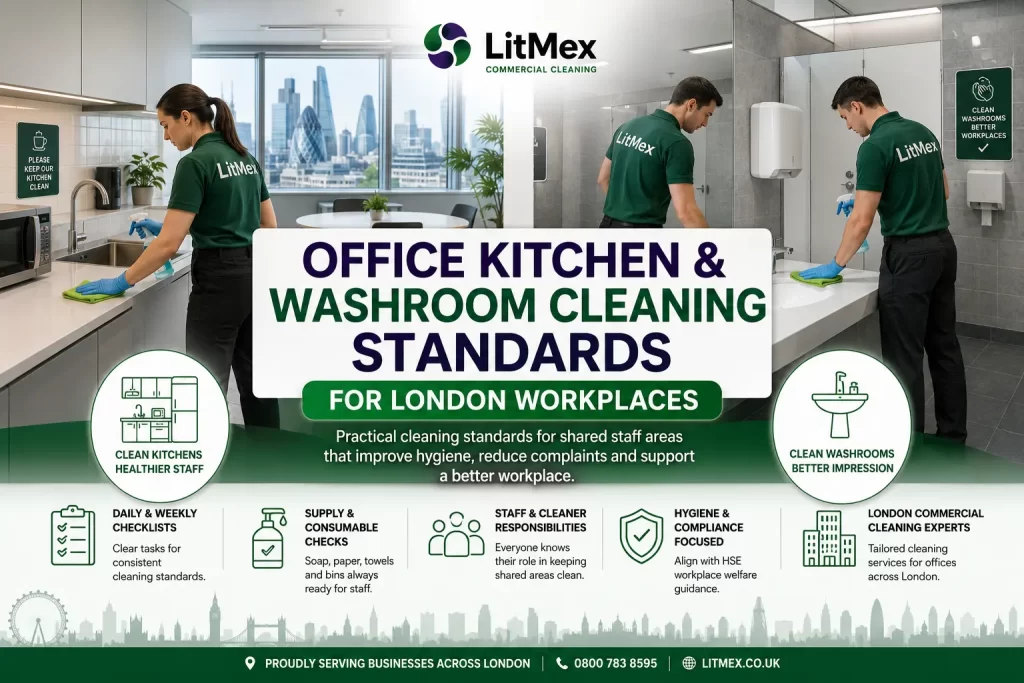
Office kitchen and washroom cleaning standards help London workplaces keep shared staff areas clean, stocked, usable and suitable for daily office life.
In most commercial offices, staff notice kitchen and washroom problems before anything else. Dirty sinks, empty soap dispensers, overflowing bins, stained surfaces, odours, sticky floors and untidy tea points can quickly lead to complaints. Clear office kitchen and washroom cleaning standards help office managers define what should be cleaned, how often it should be checked and when routine cleaning is no longer enough.
What Should Office Kitchen and Washroom Cleaning Standards Include?
Office kitchen and washroom cleaning standards should include daily cleaning of sinks, taps, worktops, toilets, basins, mirrors, floors, bins, high-touch points and shared surfaces, plus agreed checks for soap, hand-drying facilities, toilet paper, odours, spills and visible build-up. Busy London offices may need additional checks during the day, not just one clean outside working hours.
A useful standard should separate cleaner responsibilities from staff responsibilities. Cleaners can clean agreed surfaces, floors, bins, fixtures and touchpoints, but staff still need to clear personal items, report spills quickly and use shared kitchens responsibly. When both sides are clear, kitchen and washroom complaints are easier to prevent.
LitMex provides office cleaning in London for commercial workplaces that need reliable kitchen, washroom, desk, bin, floor and shared-area routines.
- Office kitchen and washroom cleaning standards explained
- Daily kitchen cleaning checklist for London offices
- Daily washroom cleaning checklist for workplace facilities
- Consumables and supply checks
- Cleaner vs staff responsibility table
- When routine cleaning is not enough
- FAQs for office managers and facilities teams
Why Kitchens and Washrooms Need Clear Cleaning Standards
Kitchens and washrooms are high-use shared areas. They are used by staff, visitors, contractors and clients throughout the day, so they can decline quickly after the scheduled cleaning visit. Without clear office kitchen and washroom cleaning standards, complaints often repeat because nobody knows whether the issue is a cleaning miss, a frequency gap, a supply issue or a staff-use problem.
| Area | Common issue | What the standard should clarify |
|---|---|---|
| Office kitchens | Crumbs, spills, dirty sinks, food smells, overflowing bins and messy appliance areas. | Which surfaces are cleaned, how often bins are emptied, who clears dishes and when appliance fronts are wiped. |
| Tea points | Sticky worktops, coffee stains, used mugs, sugar spills and bin build-up. | Daily wiping, sink checks, bin emptying, staff-use expectations and supply responsibilities. |
| Washrooms | Odours, empty dispensers, marked mirrors, wet floors, full bins and poor toilet condition. | Cleaning frequency, supply checks, odour response, floor checks and inspection responsibility. |
| Staff eating areas | Table marks, food waste, floor crumbs, chair marks and lingering smells. | Table cleaning, floor cleaning, waste handling and what staff must clear before cleaning. |
Practical rule: If kitchens and washrooms are the main source of staff complaints, the issue is often not just “cleaning quality”. It may be unclear scope, insufficient frequency, poor supply checks or no agreed staff responsibility.
Office Kitchen Cleaning Standards
Office kitchen cleaning should focus on hygiene-sensitive shared surfaces, food and drink areas, touchpoints, bins and floor safety. A London office kitchen can look clean at the start of the day and decline quickly after breakfast, lunch, meetings and coffee use.
| Kitchen area | Daily cleaning standard | Extra checks where needed |
|---|---|---|
| Worktops and tables | Wiped to remove visible marks, crumbs, spills and residue. | Midday checks in busy offices or shared coworking floors. |
| Sinks and taps | Cleaned to remove visible residue, water marks and food debris. | Check for blocked drains, smells and repeated food waste build-up. |
| Appliance fronts | Microwave, fridge, dishwasher and cupboard handles wiped externally where included. | Internal fridge or microwave cleaning should be agreed separately if required. |
| Bins and recycling | Emptied at the agreed frequency, with liners replaced where supplied. | Food-waste bins may need extra attention to avoid odours. |
| Floors | Vacuumed, swept or mopped depending on floor type and visible use. | Spill response should be quick where drinks, food or wet weather create slip risks. |
| Touchpoints | Handles, switches, taps, appliance handles and shared touchpoints cleaned as agreed. | Increase frequency in high-use kitchens and shared tea points. |
For workplaces where the kitchen is used heavily every working day, daily office cleaning in London can help keep shared staff areas under control.
Office Washroom Cleaning Standards
Office washroom cleaning standards should be clear because washrooms affect staff comfort, workplace hygiene expectations and visitor perception. They are also one of the fastest areas to generate staff complaints when cleaning frequency or supply checks are not right.
| Washroom area | Daily cleaning standard | Extra checks where needed |
|---|---|---|
| Toilets and urinals | Cleaned, checked for visible marks and left suitable for normal office use. | Additional checks in busy offices, multi-tenant buildings or visitor-facing premises. |
| Basins and taps | Cleaned to remove visible residue, soap marks, water marks and splash build-up. | Check tap areas and basin edges where build-up returns quickly. |
| Mirrors and dispensers | Mirrors wiped and dispensers checked externally as part of the washroom routine. | Record empty soap, towel or paper issues if consumables are included. |
| Floors | Cleaned for visible marks, spills and general washroom use. | Wet floors, odours or repeated marks may need more frequent inspection. |
| Bins | Emptied at the agreed frequency with liners replaced where supplied. | Sanitary and washroom waste arrangements should be clearly agreed. |
| High-touch points | Door handles, push plates, locks, taps and switches cleaned as part of the agreed routine. | Increase frequency where staff numbers, visitors or complaints justify it. |
Daily, Weekly and Periodic Cleaning Standards
Strong office kitchen and washroom cleaning standards should not rely only on daily tasks. Some tasks need daily attention, some need weekly detail cleaning, and some need periodic deep cleaning when build-up, scale, odours or staining appear.
| Frequency | Kitchen standards | Washroom standards |
|---|---|---|
| Daily | Worktops, sinks, taps, visible appliance fronts, tables, bins, floors and touchpoints. | Toilets, basins, taps, mirrors, floors, bins, dispensers and high-touch points. |
| Several times per week | Extra checks for heavy-use tea points, bins, spills and food-related odours. | Extra checks for high-use washrooms, dispensers, odours and wet floors. |
| Weekly | More detailed attention to edges, cupboard fronts, splash areas and floor corners. | More detailed attention to partitions, corners, splash areas, edges and visible build-up. |
| Monthly or periodic | Review fridge, microwave, bin areas, under-unit edges and odour sources where agreed. | Review scale, grout, drains, corners, ventilation grilles and odour sources. |
| Deep cleaning trigger | Persistent odours, greasy build-up, stained floors, hidden debris or post-event mess. | Persistent odours, scale, grout marks, stained floors, neglected edges or repeated complaints. |
A wider daily office cleaning schedule can help office managers connect kitchen and washroom tasks with desks, bins, floors, meeting rooms and shared touchpoints.
Consumables and Supply Checks
Some washroom and kitchen complaints are not cleaning problems. They are supply problems. Empty soap, missing toilet paper, no hand towels, full bins or no bin liners can make a cleaned area feel poorly maintained.
Washroom supplies
- Toilet paper
- Hand soap
- Paper towels or hand-drying facilities
- Sanitary waste arrangements
- Bin liners where agreed
Kitchen supplies
- Bin liners
- Washing-up liquid where agreed
- Kitchen roll where agreed
- Food-waste bags where used
- Cleaning cloth systems where specified
Management checks
- Who orders supplies
- Who restocks dispensers
- Who reports shortages
- Where stock is stored
- How urgent supply gaps are handled
Scope tip: Always agree whether consumables are supplied by the cleaning company, the building manager, the tenant or the office team. This avoids confusion when staff report “cleaning” complaints that are really supply issues.
Cleaner Responsibility vs Staff Responsibility
Shared kitchens and washrooms work best when the cleaning agreement and staff expectations support each other. Cleaning providers can maintain agreed standards, but staff behaviour also affects how quickly shared spaces decline during the working day.
| Issue | Cleaner responsibility | Staff or office responsibility |
|---|---|---|
| Dirty kitchen worktops | Clean agreed accessible worktop areas during the scheduled visit. | Clear dishes, personal items, food packaging and clutter from surfaces. |
| Microwave or fridge issues | Wipe external surfaces if included; internal cleaning only if agreed. | Remove expired food, label items and agree internal cleaning access. |
| Desk and cup clutter | Clean accessible surfaces only where clear-desk rules allow. | Clear desks, cups, plates and personal items before cleaning. |
| Washroom supplies | Restock dispensers if supplies and restocking are included in the contract. | Keep stock available and report shortages if the office manages supplies. |
| Spills during the day | Respond during cleaning hours or agreed daytime janitorial cover. | Report spills quickly and use temporary warning where appropriate. |
| Recurring odours | Clean agreed areas and report possible build-up or deep-clean needs. | Approve deep cleaning, repair issues or waste changes if routine cleaning is not enough. |
For offices that need all responsibilities written into a clear agreement, contract office cleaning in London can help define task scope, frequency, access and responsibility from the start.
Complaint-to-Standard Gap Table
When staff complain about office kitchens or washrooms, the quickest way to fix the issue is to identify the gap. Is it a cleaning task, a frequency problem, a supply issue, staff behaviour or a deep-clean requirement?
| Complaint | Likely gap | Best next step |
|---|---|---|
| “The kitchen smells.” | Food waste, bin frequency, appliance build-up, sink residue or hidden debris. | Check bins, sinks, appliance areas and whether periodic deep cleaning is needed. |
| “The toilets are always running out of supplies.” | Supply ownership or restocking frequency is unclear. | Confirm who supplies, stores, restocks and reports consumables. |
| “The washroom floor is often wet.” | Usage level, leaks, poor ventilation or insufficient checks. | Check cleaning frequency, leaks, ventilation and whether extra daytime checks are needed. |
| “The microwave is disgusting.” | Internal appliance cleaning may not be included, and staff may not cover food. | Agree internal appliance cleaning frequency and staff-use rules. |
| “The kitchen looks dirty by lunchtime.” | One daily clean may not match staff use. | Add midday checks or clearer staff rules for shared surfaces and dishes. |
| “The washroom smells even after cleaning.” | Scale, drains, grout, ventilation, waste or hidden build-up may be involved. | Inspect source and consider office deep cleaning where routine cleaning cannot solve it. |
For more on turning staff complaints into a cleaning improvement process, see the LitMex guide to reducing office cleaning complaints.
When Routine Cleaning Is Not Enough
Daily kitchen and washroom cleaning should maintain standards, but it cannot always remove long-term build-up. If odours, scale, stained grout, greasy edges, dirty corners or appliance build-up keep returning, the office may need a deeper reset.
Office deep cleaning is useful when routine cleaning is being asked to maintain an area that already has build-up. Once the deeper problem is handled, daily cleaning can usually keep the standard more consistent.
Kitchen deep-clean triggers
- Persistent food odours
- Build-up around bins or under units
- Greasy appliance edges
- Stained floors or splash areas
- Post-event kitchen mess
Washroom deep-clean triggers
- Persistent washroom odours
- Scale around taps or fixtures
- Marked grout or floor edges
- Build-up around partitions
- Repeated complaints after routine cleaning
For workplaces where routine cleaning is not enough, office deep cleaning in London can help reset kitchen, washroom and shared office areas.
HSE Workplace Welfare Guidance and Shared Staff Areas
HSE workplace welfare guidance says employers must provide suitable welfare facilities, including toilets and hand basins, soap and towels or a hand dryer, drinking water, somewhere to store clothing and somewhere to rest and eat meals.
For office managers, this does not mean every cleaning task is a legal checklist item. It does show why washrooms, handwashing areas and staff eating spaces should be treated as important workplace facilities, not low-priority back-of-house spaces.
Useful official reference: HSE workplace facilities and welfare guidance.
How to Write Kitchen and Washroom Standards Into a Cleaning Contract
Office kitchen and washroom cleaning standards should be written into the cleaning specification, not left as a verbal expectation. This helps avoid confusion when staff complain about tasks, supplies or frequency.
| Contract item | What to agree |
|---|---|
| Cleaning areas | List kitchens, tea points, washrooms, staff eating areas and any shared facilities. |
| Task frequency | Agree daily, weekly and periodic tasks for each area. |
| Consumables | Confirm who supplies, stores, checks and restocks washroom and kitchen consumables. |
| Appliance cleaning | Clarify whether appliance fronts, interiors, fridges, microwaves or dishwashers are included. |
| Access and timing | Agree whether cleaning happens early morning, daytime, evening or out of hours. |
| Quality checks | Set how kitchen and washroom standards will be checked and reported. |
| Deep cleaning | Agree when periodic kitchen or washroom deep cleaning should be reviewed. |
Need Clear Office Kitchen and Washroom Cleaning Standards?
LitMex helps London offices keep shared kitchens, tea points, washrooms, bins, floors and touchpoints clean, stocked where agreed and suitable for everyday workplace use.
Whether you need daily office cleaning, a clearer contract cleaning scope or a deeper reset for problem areas, LitMex can help build a practical routine around how your office is actually used.
Related Cleaning Services

FAQs: Office Kitchen and Washroom Cleaning Standards
What are office kitchen and washroom cleaning standards?
Office kitchen and washroom cleaning standards are agreed expectations for how shared kitchens, tea points, toilets, basins, taps, mirrors, floors, bins, supplies and touchpoints should be cleaned, checked and maintained in a workplace.
How often should office kitchens be cleaned?
Most office kitchens should be cleaned daily, especially where staff use worktops, sinks, bins, coffee points, microwaves, fridges and shared eating areas. Busy London offices may need additional checks during the day.
How often should office washrooms be cleaned?
Most office washrooms should be cleaned daily, with extra checks in busy workplaces, client-facing offices, multi-tenant buildings or premises where staff complaints involve supplies, odours, wet floors or visible marks.
Who is responsible for office kitchen cleanliness?
The cleaning company is responsible for agreed cleaning tasks, but staff usually need to clear personal items, dishes, food waste and clutter so surfaces can be cleaned properly. The contract should make responsibilities clear.
Should washroom supplies be part of the cleaning contract?
Washroom supplies can be included in the cleaning contract, but this must be agreed clearly. The office should confirm who supplies, stores, checks and restocks toilet paper, soap, hand towels or other consumables.
What causes most office kitchen cleaning complaints?
Common office kitchen complaints include dirty sinks, sticky worktops, food smells, overflowing bins, stained floors, messy appliances and staff leaving dishes or food items in shared areas.
What causes most office washroom cleaning complaints?
Common office washroom complaints include empty soap or paper supplies, odours, marked toilets, dirty basins, wet floors, full bins, mirrors with splash marks and high-touch points that do not feel clean.
When do office kitchens or washrooms need deep cleaning?
Office kitchens or washrooms may need deep cleaning when routine cleaning cannot remove persistent odours, scale, stains, greasy build-up, dirty edges, grout marks, appliance build-up or repeated complaint areas.
How can office managers improve kitchen and washroom standards?
Office managers can improve standards by writing tasks into the cleaning scope, agreeing frequency, clarifying consumables, setting staff-use rules, checking high-complaint areas and scheduling deep cleaning when routine cleaning is not enough.
Can LitMex help with office kitchen and washroom cleaning standards?
Yes. LitMex helps London offices create practical cleaning routines for kitchens, tea points, washrooms, bins, touchpoints, floors and shared staff areas through daily office cleaning, contract cleaning and office deep cleaning support.